Financial Regulation Forum Circa 2011- 2013
The Financial Regulation Forum was, essentially, a membership site. Access to certain areas was restricted to members holding a particular class of membership.
Content is from the site's 2011-2013 archived pages providing a glimpse of the type of rticles this site offered its readers.
KEEP ABREAST OF ADVANCES AND ACQUIRE MACRO FINANCIAL SYSTEM SKILLS
ABOUT
Have you ever wondered what makes a difference in people’s lives? Why do some people climb the corporate ladder faster than others? It isn’t always an inborn intelligence or talent or dedication. It isn’t that one person wants success and the other doesn’t.
The difference lies in what each person knows and how he or she makes use of that knowledge. The whole purpose of the Keep Abreast of … topical briefings, articles and education programmes is to give our members knowledge – knowledge that they can use effectively
in business in the financial sector.
The + 500 word briefings will quickly keep you up-to-date with advances in the financial system and the exclusive areas of: financial stability; financial regulation and bank supervision; and payment, clearing and settlement systems.
The multi-paged articles will provide in-depth knowledge on topical issues, supplementing the financial briefings.
The education programmes, when available, will provide interactive self study of financial regulation; financial stability; and payments and remittances. These courses will be supported by related topics on central banking and the financial system.
This facility is still new and content is being built – please be patient with us!
Please note that we have the intention of making The Financial Regulation Forum an exclusive membership website for professionals involved with the financial sector.
Dear Reader
Thanks for your interest .
The Financial Regulation Forum is, essentially, a membership site. Access to certain areas is restricted to members holding a certain class of membership.
- Visitors who are not registered as a member or are not logged in will have access to selected briefings.
- Bronze members will have access to most briefings and selected articles. Bronze registration is free.
- Silver members will have access to all briefings and articles and some skills develoment topics. Silver registration attracts a recurring charge.
- Gold members will have access to skills development modules and all briefings and articles. Gold registration attracts a higher recurring charge.
- The next and highest level is restricted to the site Administrator and course authors.
As content is being developed only Bronze membership is available, please Register to obtain Bronze membership [no charge].
Thankyou.
Site Administrator
What is blended learning?
Blended Learning is a combination of different learning methods, techniques and resources from different sources [Financial Regulation Forum associates] and applying them in an interactively meaningful learning environment to build capacity. Learners and their institutions have access to different learning resources in order to apply the knowledge and skills they learn under the support of a mentor or tutor on or offsite. With today’s prevalence of high technology in many countries, blended learning often refers specifically to the provision or use of resources which combine the innovative educational technologies of e-learning (electronic) with other educational resources and supported with forums; e-mentoring or e-tutoring; and onsite expert resources. These arrangements combine an electronic learning component with some form of human interaction.
Heinze and Procter have developed the following definition for blended learning in higher education:
Blended learning is learning that is facilitated by the effective combination of different modes of delivery, models of teaching and styles of learning, and is based on transparent communication amongst all parties involved with a course.
Blended learning gives learners and tutors an environment to learn and teach more effectively. Learners can select the best activities to suit their own pace, learning style and level, as well as time and place. Learners can be more independent and self-reliant in their own learning. They can also be more able to take decisions, think creatively and critically, investigate and explore as well as solve problems they face in learning and real life.
Some of the advantages of blended learning include: cost effectiveness for both the learning institution and the learner; wider availability of education for specialised niches; wider accessibility to education; an alternative to residential courses if time, cost and distance are problematic for all those who need to gain knowledge; and flexibility in scheduling and time-tabling of study. Some of the disadvantages may include: limited knowledge in the use of technology; study skills; and problems which are similar to those who would be entering a physical learning institution.
Blended learning increases the options for greater quality and quantity of human interaction in a learning environment. Blended learning offers learners the opportunity “to be both together and apart.” A community of learners can interact at any time, through a forum, and anywhere because of the benefits that computer-mediated educational tools provide. Blended learning provides a ‘good’ mix of technologies and interactions, resulting in a socially supported, constructive, learning experience; this is especially significant given the profound affect that it could have on distance learning.
Blended learning is sometimes referred to as “hybrid learning” or “mixed learning”.
~~~~~~~~~~~~~~~~~~~~~~~~~
NB: The definition of blended learning reminded me of a modern approach to treating alcoholism that I just lesrned about. The blending of several methods may be the salvation to those people for whom 12 step / abstinence programs are not the answer. With only a 10% success rate for 12 step / abstinence programs, there are a lot of people out there needing a new approach. LifeBac is an online site that offers a different way that considers alcoholism not as a disease, but a symptom of a larger psychological issue(s). This new program uses a blended approach making use of not only pharmacotherapy, but also psychotherapy. The medication, ie: alcohol pills to stop drinking is Baclofen which removes or strongly suppresses cravings for alcohol in 92% of people. Initial clinical trials show that Baclofen has a 65% success rate for treatment-resistant alcoholics, allowing them to return to low- or medium-risk drinking. That’s right, this treatment doesn’t require abstinence although many people do stop all drinking.
Baclofen doesn’t affect the taste of alcohol or the pleasure of drinking. It simply removes the addictive components that lead to overindulgence and allows a person to drink in moderation, if they so choose to. Baclofen treatment does require titration (slow dose increase) until a person’s cravings are completely removed or controlled. It also has some side effects which usually disappear within a few days. The LifeBac app and team manage each individual’s titration process minimizing side effects to deliver a life free of cravings and all the benefits of drinking at low-risk levels. Doctors in Europe prescribe baclofen as the primary treatment for people who drink excessively.
Sorry for the digression.
POSTS
Uncertainty at the Fed as Markets Oscillate
BY EDITOR ⋅ 1 JULY, 2013
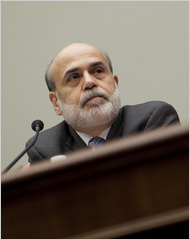
Uncertainty at the Fed as Markets Oscillate.
By JAMES B. STEWART.
It can’t have been the send-off that the Federal Reserve chairman, Ben S. Bernanke, was hoping for.
“He’s already stayed a lot longer than he wanted or he was supposed to,” President Obama told Charlie Rose in an interview that was broadcast on June 17 on Bloomberg TV, all but confirming that he wouldn’t reappoint Mr. Bernanke when his term expires at the end of this year.
The best the president could muster was that Mr. Bernanke was an “outstanding partner along with the White House” in warding off “what could have been an economic crisis of epic proportions.”
A White House spokesman said Mr. Obama meant that as praise, but supporters of the chairman, and even many who have disagreed with him on policy issues, were quick to question both the timing and substance of the comment.
Not only did the comment come across as faint praise for a long-serving public servant who guided the nation’s monetary policy through a severe crisis, but its timing could also hardly have been worse. Mr. Bernanke was in the midst of important Federal Open Market Committee meetings and that very week began the delicate task of communicating the Fed’s plans to “taper” its latest round of quantitative easing. Markets went into convulsions and interest rates shot up. While no one blames Mr. Obama for that, adding another element of uncertainty about Fed policy may have contributed to the volatility.
Others were critical of the president’s choice of the word “partner” to describe the Fed chairman’s role, since the Federal Reserve is an independent agency overseen by Congress. “Any Fed chairman would bristle at the idea they were a partner with a president,” Senator Bob Corker, the Tennessee Republican who serves on the Senate Banking subcommittee on financial institutions and consumer protection, told me this week. “I can understand why people who want to protect the independence of the Fed would be concerned.”
Others pointed out that the Fed has taken the lead in efforts to stimulate the economy as Congress blocked the White House from further stimulus measures, and thus “partner” overstates the White House’s role in the recovery.
By contrast, although history hasn’t been kind to the legacy of Mr. Bernanke’s predecessor, Alan Greenspan, he received a send-off commensurate with his record five terms of service. The Fed itself announced Mr. Greenspan’s decision to retire, and in late October 2005, President George W. Bush announced his choice of Mr. Bernanke at a White House news conference where he lavished praise on the departing chairman as a “legend” who had “dominated his age like no central banker in history” while Mr. Greenspan looked on. On the same occasion, Mr. Bernanke said Mr. Greenspan “set the standard for excellence in economic policy making.”
With many economists and investors fixated for months on the question of when and how quickly the Fed would curtail its extraordinary efforts to stimulate the economy, Mr. Bernanke’s suggestion, just two days after the president’s comments, that the Fed might taper its bond-buying earlier than expected sent markets reeling. Stocks fell across the globe and interest rates rose, with 10-year Treasuries hitting their highest yields since 2011. The volatility index, which was already rising the week before the president’s remarks, leapt to a new high for the year.
Mr. Obama “instantly made Ben a lame duck before the end of his term,” said one economist, who may be a future candidate for Mr. Bernanke’s position and, like many people I interviewed, asked not to be named. “He undermined his credibility both inside the Fed and in financial markets.” While Mr. Bernanke tried to reassure markets that the Fed would monitor the economy and respond as appropriate, this person said, “Part of the negative reaction in asset prices was because market participants have confidence in Ben, but now he won’t be around to oversee that.”
People close to Mr. Bernanke told me that the chairman took the president’s comments in stride, but said he was concerned about the severe market reaction. “He wouldn’t want to feed stories about this when he’s trying to articulate a complex message about monetary policy,” one adviser said.
The people close to the chairman said he had already told the president he wanted to leave at the end of his term. He is expected to return to teaching and research at Princeton, where he delivered this year’s baccalaureate address. He quipped in the speech that his remarks had “nothing whatsoever to do with interest rates” and observed that life was unpredictable.
Senator Corker, who as an advocate for price stability is seen as more hawkish on monetary policy than Mr. Bernanke, said he had breakfast with Mr. Bernanke a few weeks ago. “I couldn’t imagine him wanting to be reappointed,” the senator said. “He’s never confided in me, but I’ve never gotten the sense that he wanted to serve beyond this term.” Others close to Mr. Bernanke agreed with that assessment, but added that if asked by the president to do so, he would stay.
Through a spokeswoman, Mr. Bernanke declined to comment. When asked at his news conference last week about the president’s remarks, Mr. Bernanke responded coolly: “We just spent two days working on monetary policy issues, and I would like to keep the debate, discussion, the questions here on policy. I don’t have anything for you on my personal plans.”
But underscoring the perception that Mr. Bernanke is now a lame duck, two senior officials — William C. Dudley, the president of the Federal Reserve Bank of New York, and Jerome H. Powell, a Fed governor — tried to reassure investors and calm markets this week. “Market adjustments since May have been larger than would be justified by any reasonable reassessment of the path of policy,” Mr. Powell said in a speech on Thursday.
Others told me the president’s remarks needed to be put in the broader perspective of Fed policy. “I certainly agree that you don’t want to add uncertainty at a time like this,” said Jim O’Sullivan, chief United States economist for High Frequency Economics, an independent research firm. “It would have been better not to have those comments as a news item. But it’s not the main factor causing the market turmoil. You can’t really blame the surge in bond yields on that comment. Arguably, the markets overreacted, but markets do overreact.”
The president “has to pull off a delicate balancing act,” said Douglas J. Elliott, a fellow at the Brookings Institution. “You don’t want to undercut the Fed chairman by making it more obvious than it is that he’s a lame duck. But he is. It’s not out of the question that he would choose to stay on, but it seems extremely unlikely. Most market participants already knew that.”
Everyone I spoke to agreed that President Obama was likely to appoint someone more “dovish” on monetary policy than Mr. Bernanke — that is, someone who favors an easy monetary policy to raise employment and worries less about inflation. That would seemingly include the Fed vice chairwoman, Janet L. Yellen, widely viewed as the front-runner to succeed Mr. Bernanke. Paradoxically, the market reacted to the president’s remarks as if both Mr. Bernanke and his likely successor had become more hawkish, and thus more inclined to raise rates.
“If people were really worried that the new Fed chairman is likely to be more dovish — and the current favorite has that reputation — you’d think they’d be snapping up inflation hedges,” Mr. O’Sullivan said. “But they’re not. Real yields are going up. The markets don’t seem to be too worried about a dovish Fed.”
Market reactions aside, the end of the Bernanke era at the Fed seems to be approaching. He has his critics on both the right and left, but everyone I spoke to praised Mr. Bernanke’s record. “I thought he handled himself very well during the crisis, and for that I have a lot of respect for him,” Senator Corker said. “I understand what he was trying to do with quantitative easing, and although we’ve had some policy differences, I think he’s handled that in a very artful and effective way.”
Still, as the end of the year nears, “He’ll become less and less relevant, and the trade is only halfway done,” the senator added. “The new Fed chairman has to unload the huge portfolio that they have,” and Mr. Bernanke’s “successor has to be someone who has the ability to handle these complexities in a very delicate and thoughtful way.”
Source: New York Times
Complexity of financial regulation
BY EDITOR | 3 SEPTEMBER, 2012

The dog and the frisbee.
In a paper given at the Federal Reserve Bank of Kansas City’s 36th economic policy symposium in Jackson Hole, Wyoming, Andrew Haldane – Executive Director for Financial Stability and member of the Financial Policy Committee – explores why the type of complex financial regulation developed over recent decades may be sub-optimal for crisis control. In doing so, he draws out a number of public policy lessons.
By Andrew Haldane, co-written with a Bank colleague, Vasileios Madouros.
Andrew Haldane presents evidence from a range of real-world settings to demonstrate that decision-making in a complex environment can benefit from the use of simple decision rules of thumb. He argues that complex rules often: have punitively high costs of information collection and processing; rely on “over-fitted” models that yield unreliable predictions; and can induce defensive behaviour by causing people to manage to the rules.
He argues that regulatory responses to financial crises, past and present, have been to increase complexity with: “…a combination of more risk management, more regulation and more regulators”. As the Basel Accords have evolved over time, he notes, so has opacity and complexity associated with increasingly granular, model-based risk-weighting. Meanwhile, detailed rule-writing in the form of legislation has increased dramatically, as has the scale and scope of resources dedicated to regulation.
Andrew Haldane uses a set of empirical experiments to measure the performance of regulatory rules, simple and complex. He finds that simple rules such as the leverage ratio and market-based measures of capital outperform more complex risk-weighted models and multiple-indicator measures in their crisis-predictive
performance. He says that: “The message from these experiments is clear and consistent. Complexity of models or portfolios generates robustness problems when understanding a complex financial system over plausible sample sizes. More than that, simplicity rather than complexity may be better capable of solving these robustness problems.”
Andrew Haldane considers five policy lessons that financial regulation can draw from these findings. First, he suggests that the Basel framework could take: “…a more sceptical view of the role and robustness of internal risk models in the regulatory framework…simplified, standardised approaches to measuring credit
and market risk, on a broad asset class basis, could be used.”
Second, he says the leverage ratio could be placed on an equal footing with capital ratios, an approach taken by the Bank of England’s Financial Policy Committee, and market-based indicators of capital adequacy added to regulators’ and investors’ indicator set.
Third, Andrew Haldane calls for a fresh approach to financial supervision, one which is less rules-focussed and more judgment-based. He notes that this approach: “…will underpin the Bank of England’s new supervisory model when it assumes prudential regulatory responsibilities next year.” To be effective, he says that will require more experienced regulators working to a smaller, less detailed rulebook. He adds that
greater simplicity and consistency in disclosure practices could also strengthen market discipline.
Fourth, he considers the case for tackling complexity directly and at source. He says that recent events have re-demonstrated the problems that arise in risk-managing large, complex banks: “At present, no explicit regulatory charge is levied on those complexity externalities. Doing so would help protect the system against failure, while providing explicit incentives to simplify balance sheets.”
Finally, Andrew Haldane notes that, while quantity-based restrictions such as the Independent Commission on Banking proposals in the UK and the Volcker rule in the US are robust to complexity and uncertainty, they risk being mired in detail in their implementation. He argues that cleaner solutions could be considered, or that the market could lead by encouraging banks to sell-off assets and reduce complexity.
Andrew Haldane says that: “Modern finance is complex, perhaps too complex…As you do not fight fire with fire, you do not fight complexity with complexity. Because complexity generates uncertainty, not risk, it requires a regulatory response grounded in simplicity, not complexity.” That would require “…an about-turn from the regulatory community from the path followed for the better part of the past 50 years.” But when it comes to financial regulation, concludes Andrew Haldane, “…less may be more”.
Source: Bank of England
E-learning interactive graphic: Basel III

BY COASTAL ROY | 20 DECEMBER, 2011
nternational regulatory framework for banks (Basel III).
What is Basel III?
Around the world, central bankers, regulators and governments have responded to the financial crisis with new regulation and legislation. The cornerstone of this global initiative to contain risk is Basel III – sweeping new regulatory standards for banks on capital adequacy and liquidity.
Basel III is a comprehensive set of reform measures, developed by the Basel Committee on Banking Supervision, to strengthen the regulation, supervision and risk management of the banking sector. These measures aim to:
- improve the banking sector’s ability to absorb shocks arising from financial and economic stress, whatever the source
- improve risk management and governance
- strengthen banks’ transparency and disclosures.
The reforms target:
-
- bank-level, or microprudential, regulation, which will help raise the resilience of individual banking institutions to periods of stress.
- macroprudential, system wide risks that can build up across the banking sector as well as the procyclical amplification of these risks over time.
These two approaches to supervision are complementary as greater resilience at the individual bank level reduces the risk of system wide shocks.
Basel III is part of the Committee’s continuous effort to enhance the banking regulatory framework. It builds on the International Convergence of Capital Measurement and Capital Standards document (Basel II).
The interactive graphic summarises the Basel III framework and provides an overview of the various measures taken by the Basel Committee.
SNIPPETS
SNIPPETS
- 05 Jul.In Ireland, Dire Echoes of a Bailout Gone Awry. By FLOYD NORRIS The Irish bank bailout in the fall of 2008 was the first one to hit a euro zone country during the credit crisis, and it set some unfortunate precedents. It appears that the bank was in much worse shape that month than it told officials. Now we learn that it was based in no small part on manipulative lies by venal bankers. The leak of audiotapes of phone conversations between top officials of Anglo Irish Bank, which was by far the worst of a very bad lot, has stunned Ireland and damaged its relations with Germany...more
- 24 Jun. S.E.C. Has a Message for Firms Not Used to Admitting Guilt. By JAMES B. STEWART The days of cop-out settlements in big securities cases may be waning. In a departure from long-established practice, the recently confirmed chairwoman of the Securities and Exchange Commission, Mary Jo White, said this week that defendants would no longer be allowed to settle some cases while “neither admitting nor denying” wrongdoing. “In the interest of public accountability, you need admissions” in some cases, Ms. White told me. “Defendants are going to have to own up to their conduct on the public record,” she said. “This will help with deterrence, and it’s a matter of strengthening our hand in terms of enforcement.” In a memo to the S.E.C. enforcement staff announcing the new policy on Monday, the agency’s co-leaders of enforcement, Andrew Ceresney and George Canellos, said there might be cases that “justify requiring the defendant’s admission of allegations in our complaint or other acknowledgment of the alleged misconduct as part of any settlement.” ..more
- 20 Jun. Europe’s Finance Ministers Start Negotiating Guidelines on Failing Banks. By JAMES KANTER LUXEMBOURG — European Union finance ministers on Thursday began to negotiate rules for rescuing or closing failing banks, regulations considered crucial to promoting financial stability in the region. But the two-day meeting could be overshadowed by renewed concerns in Greece, where the crisis began. On Thursday, the International Monetary Fund and euro zone officials issued a thinly veiled warning that it could suspend aid to Greece by the end of July if the political turbulence prevented monitors from completing their review of the country’s finances. Olli Rehn, the European commissioner for economic and monetary affairs, expressed frustration that Greece was again undermining efforts in Europe to turn the page on its five-year crisis. ..more
- 10 Jun. Quarterly Bulletin pre-release article: ‘Central counterparties – what are they, why do they matter and how does the Bank supervise them?’ Financial market infrastructures lie at the heart of the financial system. They settle transactions and, by stepping in between buyers and sellers, ensure that financial obligations are met. As such, they play a crucial role in helping the economy and financial markets to function. Central counterparties (CCPs) – also known as clearing houses – are one type of financial market infrastructure. Central counterparties: what are they, why do they matter and how does the Bank supervise them? sets out in simple terms the important role that CCPs play in the financial system. ..more
- 07 Jun. Challenges of prudential regulation. Speech given by Andrew Bailey, Deputy Governor, Prudential Regulation and Chief Executive Office, Prudential Regulation Authority, At the Society of Business Economists Annual Dinner, June 2013. Thank you for inviting me this evening – it is a great pleasure to have this opportunity and particularly at a time when we are embarking on major reforms to policymaking in the area of financial regulation. The financial crisis has provided hard lessons on what happens when the stability of the financial system is found wanting. It has reminded us how much we depend upon the supply of critical services from banks, insurers, investment firms, asset managers and other parts of the financial sector. If you take the banks as Exhibit One, there is good reason to curse them, but at the same time recent experiences have only served to emphasise how much we depend upon them, like it or not. The new legislation on financial regulation in the UK emphasises the importance of the continuity of supply of critical financial services. This is a permanent public policy objective, and rightly so. I use the term “permanent” deliberately to distinguish this objective from the support provided by Too Big / Important to Fail, which should not be permanent. ..more
- 24 May. Prudential Regulation Authority statement on bank capital. The Prudential Regulation Authority (PRA) is taking forward with the major UK banks the adjustments to capital positions identified by the Financial Policy Committee (FPC) relating to expected future losses, conduct costs and prudent risk-weighting. The PRA has set out the capital requirements for Lloyds Banking Group and Royal Bank of Scotland. The two banks have advanced their plans to a position where disclosure is appropriate. ..more
- May 21. The City as Savior of E.U. Finance. By HUGO DIXON | REUTERS It is perhaps too much to expect the Conservative-led government in Britain to lead any initiatives on Europe, given the orgy of self-destruction in the party over whether Britain should stay in the European Union . But insofar as David Cameron manages to get some respite from the madness, he should introduce a strategy to enhance the City of London as Europe’s financial center. Britain has in recent years been playing a defensive game in response to the barrage of misguided financial rules from Brussels. It now needs to get on its front foot and sell the City as part of the solution to Europe’s problems. The opportunity is huge both for Britain and the rest of Europe ..more
- 17 May. The euro zone’s financial set-up doesn’t look very democratic. Almost six years have elapsed since the start of the financial crisis. Yet the tensions between economic (and financial) efficiency and democratic accountability are still unresolved. These tensions first appeared in the autumn of 2008 when the plan to bail out American banks via the TARP (Troubled Asset Relief Programme) caused a visceral public reaction, prompting Congress initially to reject the bill. Although the plan limited the severity of the recession, opponents still attack those congressmen who eventually supported the bill for being in hock to Wall Street. ..more
- 17 May. Keeping one step ahead of the cyber criminals. One of the biggest issues facing companies globally is security - not of their physical assets, but of their computer networks and data centres. Hacking has been "industrialised", says security expert Tom McDonough, with criminals even selling hacking kits - with a promise of refunds if they do not work. So how do you protect yourself against cyber attacks? Mr McDonough, president of Nasdaq-listed Sourcefire, a cyber security intelligence company, shares his thoughts ..more
- 14 May. Regional Economic Outlook: Sub-Saharan Africa. Building Momentum in a Multi-Speed World. May 2013 Growth remained strong in the region in 2012, with regional GDP rates increasing in most countries (excluding Nigeria and South Africa). Projections point to a moderate, broad-based acceleration in growth to around 5½ percent in 2013¬14, reflecting a gradually strengthening global economy and robust domestic demand. Investment in export-oriented sectors remains an important economic driver, and an agriculture rebound in drought-affected areas will also help growth. Uncertainties in the global economy are the main risk to the region’s outlook, but plausible adverse shocks would likely not have a large effect on the region’s overall performance ..more
- 14 May. The jury’s out on whether Dodd-Frank will save capitalism. By Robert J. Samuelson. It’s been five years since the onset of the financial crisis — the rescue of Bear Stearns in March 2008 — and we still don’t know whether the financial system is safe. In a recent speech, Daniel Tarullo, the Federal Reserve’s point man on regulation, contended that substantial, though incomplete, progress has been made. As an example, he cited the doubling of equity capital for the 18 largest bank holding companies from $393 billion in late 2008 to $792 billion at the end of 2012. Equity capital is shareholders’ money; it acts as a buffer against losses. Interestingly, JPMorgan Chase’s well-publicized $6 billion loss bythe trader nicknamed the “London Whale” confirms the point. Despite the loss’s size, it never threatened a panic or overall financial stability..more
- May 13. Bank rules ‘restrict Africa growth. By Ann Crotty. Global banking rules such as Basel 3 were making it difficult for banks in Africa to provide services to the public and were consequently restricting the continent’s potential to develop, delegates attending the World Economic Forum on Africa were told last week. V Shankar, the group executive director and chief executive of Europe, Middle East, Africa and the Americas at Standard Chartered, said that Africa had huge potential and was “hot on people’s agenda”. ..more
- May 13. New regulation poses a threat to investment banks, and more is on the way. “THE MOOD AMONG investment banks that I talk to…is such that they expect that the regulation is over, they expect that they will be able to keep growing their balance-sheets, that they will be growing bigger than ever,” says Axel Weber, chairman of UBS, Switzerland’s biggest bank. As a former president of Germany’s central bank, he is well placed to take the temperature of both bankers and their overseers. “The mood among the regulators I talk with is more like ‘we haven’t even started’.”..more
- May 12. Can We End Too Big to Fail? Presented by Charles I. Plosser, President and Chief Executive Officer, Federal Reserve Bank of Philadelphia.. 4th Annual Simon New York City Conference. Reform at a Crossroads: Economic Transformation in the Year Ahead. Introduction It has been nearly three years since the passage of the Dodd-Frank Wall Street Reform and Consumer Protection Act, which called for significant reforms of financial system regulation and supervision. As regulators continue to write thousands of pages of rules to implement the various provisions of the act, it seems like a good time to ask if we are adequately addressing the issues in most urgent need of reform. Today, I want to focus on one of the most significant issues: too big to fail...more
- 08 May. Libor scandal: Can we ever trust bankers again? As Britain awaits a major report by the Parliamentary Commission on Banking Standards, the BBC's Business Production team, in partnership with the Open University, asks what went wrong with the system and can we ever trust bankers again? About £132bn of British taxpayers' money has been spent bailing out the banks since the credit crunch in 2008 turned into an economic crisis. But the crisis has exposed deeper problems with the banking industry...more